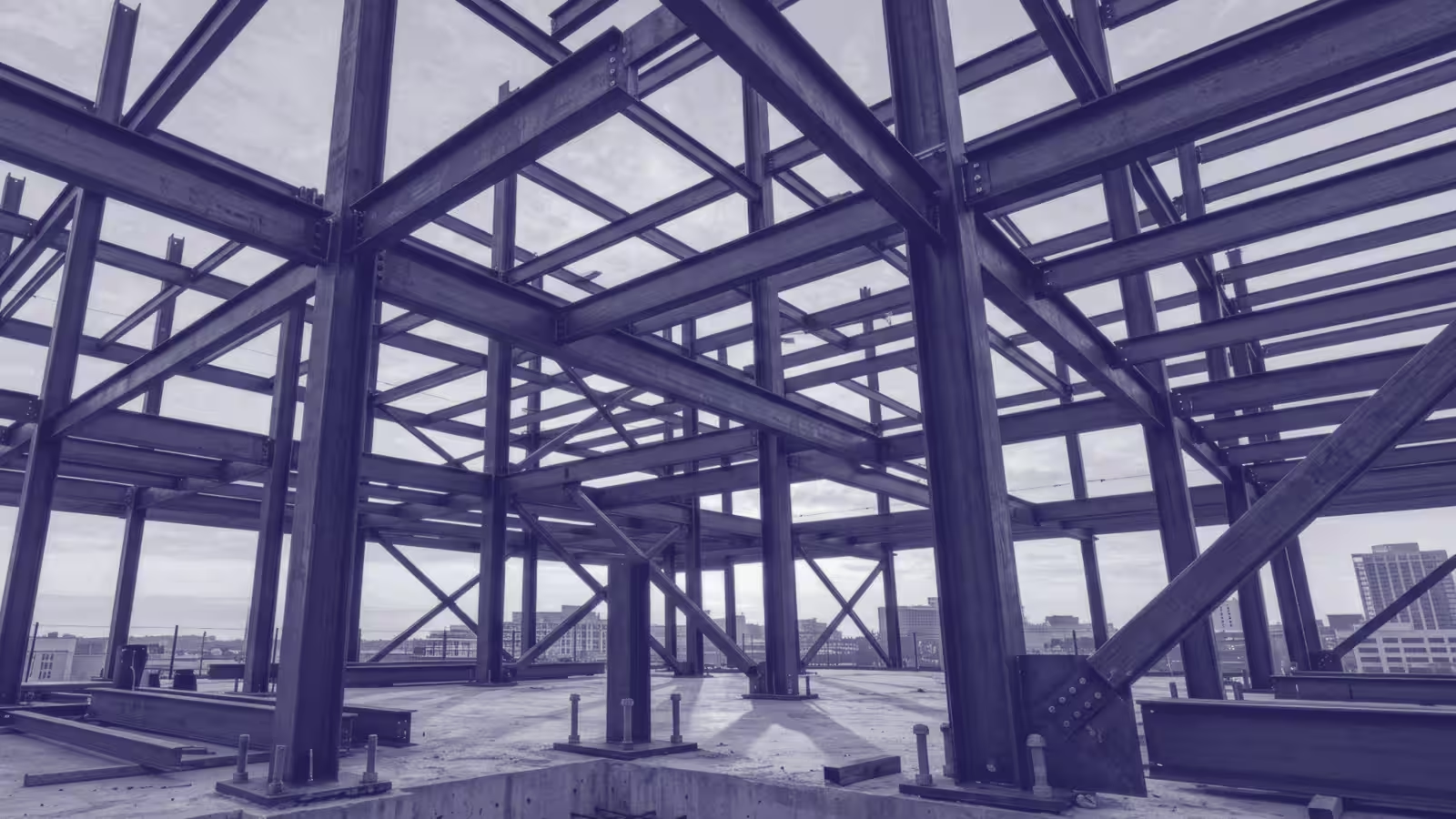
Commercial structure representing connected revenue systems
Commercial Architecture

Design the commercial environment as one system.

Most organisations do not have a marketing, sales, technology or data problem in isolation. Commercial Architecture provides a discipline for designing how those connected parts work together with strategy, people, processes and governance to create, convert, manage and expand revenue.

Design the commercial environment
StrategyPeopleProcessTechnologyDataGovernance
What is Commercial Architecture?

A discipline for designing and governing the commercial system.

Commercial Architecture is the discipline concerned with the intentional design and governance of the interconnected strategy, people, processes, technology, data and controls through which an organisation creates, converts, manages and expands revenue.

It treats commercial performance as the output of a system rather than the result of isolated functions.

Marketing, sales, customer experience, operations, technology and data still retain their individual responsibilities. Commercial Architecture focuses on the relationships between them.

It asks whether those parts have been deliberately designed to work together around the organisation's commercial objectives, or whether they have simply accumulated over time.

Connected commercial structure supporting organisational growth
Why organisations need a Commercial Architecture

Businesses rarely become fragmented intentionally. They grow into it.

A CRM is introduced to help sales. Marketing adds its own platforms. A new website is built. Automation is layered across existing processes. Different teams create their own reporting. New specialists, agencies and suppliers are added.

Each decision can make sense on its own. But over time, the organisation can develop a commercial environment in which the individual components work while the overall system becomes harder to understand, coordinate and govern.

That creates problems such as:

  • Duplicated technology
  • Conflicting customer data
  • Inconsistent definitions
  • Unclear ownership
  • Disconnected marketing and sales processes
  • Manual handovers
  • Duplicated work
  • Poor reporting confidence
  • Local optimisation between departments
  • Slow decision-making
  • Increasing dependence on individual people
  • Commercial complexity growing faster than revenue

At that point, the problem is not simply execution. It is architectural.

Commercial performance emerges from a system

Revenue does not originate from one department.

A customer may first encounter the organisation through search, social media, a referral or an event. They interact with the website. Their information enters a system. Marketing nurtures the relationship. Sales qualifies and progresses the opportunity. A proposal is created. Operations or delivery becomes involved. The customer is onboarded. Support, communication and account development continue. Leadership reviews performance. Technology and data support every stage.

A failure anywhere in that chain can affect the revenue outcome.

Commercial Architecture therefore looks at the whole arrangement through which revenue is produced and managed, not simply the performance of individual functions.

Six connected domains

Commercial Architecture examines the environment across six interdependent domains.

01

Strategy

Where the organisation is going.

Strategy establishes the commercial direction across markets, customer segments, ideal customer profiles, positioning, proposition, offers, priorities, growth objectives and resource allocation.

Without strategic clarity, the rest of the system can become highly efficient at pursuing the wrong outcomes.

02

People

Who is responsible for producing the outcome.

Commercial systems depend on people with clear responsibilities, capabilities and decision rights across leadership, marketing, sales, customer-facing teams, operations, specialists and internal and external resources.

A technically sophisticated environment can still fail if ownership is unclear or teams optimise independently.

03

Process

How commercial work moves through the organisation.

Processes connect people and systems across lead capture, qualification, handover, opportunity progression, proposals, onboarding, customer communication, retention, expansion, reporting and decision-making.

Commercial Architecture looks for unnecessary friction, inconsistency, duplication and dependency.

04

Technology

The infrastructure that enables the environment.

Technology can include CRM, websites, content management, automation, analytics, communications, sales technology, customer portals, AI, integrations and operational applications.

Commercial Architecture begins with operating requirements and determines what technology should support them.

05

Data

The information required to operate and understand the system.

Commercial information needs to be captured, structured, connected, accessible, reliable, governed and interpreted across the customer lifecycle.

Poor data affects automation, customer experience, sales prioritisation, forecasting, leadership decisions and AI.

06

Governance

How the system remains aligned.

Governance establishes ownership, decision rights, standards, definitions, controls, review cadence, prioritisation, accountability, assurance and change management.

Without governance, even a well-designed environment can gradually fragment again.

The domains cannot be designed in isolation

The value comes from understanding the relationships between them.

A sales process decision may require a CRM change. A CRM change affects customer data. Customer data affects reporting. Reporting affects leadership decisions.

A new market changes positioning. Positioning changes marketing. Marketing changes demand. Demand changes sales capacity. Sales capacity affects process design. Process design affects automation. Automation affects technology. Technology affects data governance.

The visible symptom may sit in one department. The underlying cause may sit somewhere else in the system.

What Commercial Architecture is not

A broader commercial discipline, not another channel or software framework.

01

Not another marketing framework

Marketing is one part of the commercial environment. Commercial Architecture also considers the relationships between marketing, sales, customer experience, operations, technology, data, leadership and governance.

02

Not RevOps

RevOps helps operate and optimise parts of the revenue environment. Commercial Architecture asks how the environment itself should be designed. The two can work together, but they are not the same discipline.

03

Not Enterprise Architecture

Enterprise Architecture examines how capabilities, information, applications and technology support the wider enterprise. Commercial Architecture has a narrower but deeper commercial focus, placing revenue outcomes at the centre.

04

Not a go-to-market strategy

A go-to-market strategy determines how an offer reaches a market. Commercial Architecture asks what environment needs to exist for that strategy to operate effectively and remain coherent as the organisation grows.

05

Not software

CRM, automation, AI and analytics can enable the architecture, but none of them determine commercial priorities, responsibilities, process design, governance or how the environment should evolve.

06

Not isolated solutions

Commercial Architecture connects decisions across the environment rather than treating every tool, process or specialist intervention as an independent solution.

A wider perspective on commercial system design
Principles of Commercial Architecture

Design for coherence, evidence and controlled evolution.

01

Intentionality

Commercial environments should be deliberately designed rather than allowed to emerge solely through accumulation.

02

Coherence

The parts of the system should reinforce rather than contradict one another.

03

Traceability

Commercial decisions, processes and capabilities should be traceable back to defined objectives.

04

Modularity

Components should evolve without requiring unnecessary redesign of the entire environment.

05

Evidence

Decisions should increasingly be supported by reliable commercial data rather than intuition alone.

06

Governance

Ownership, definitions, controls and decision rights should be explicit.

07

Adaptability

The architecture should evolve as markets, technology, customers and organisational requirements change.

08

Proportionality

The architecture should reflect the organisation's complexity and objectives without introducing unnecessary structure.

The objective is not rigidity. It is controlled evolution.

What does a Commercial Architect do?

Turn commercial intent into an environment capable of supporting it.

A Commercial Architect works across the boundaries that normally separate commercial functions. The role is not simply to produce a strategy document.

It involves understanding the current environment, identifying structural constraints and designing a more coherent target state.

  • Diagnosing the current environment
  • Identifying dependencies
  • Designing the target state
  • Establishing principles and standards
  • Defining responsibilities
  • Developing the roadmap
  • Supporting implementation
  • Providing assurance

Commercial Architecture sits between strategy and operation.

When architectural intervention becomes necessary

The greater the interdependence, the more likely the problem is architectural rather than local.

Not every commercial problem requires an architectural response. A landing page may need improving, a campaign may be underperforming, a sales team may need better training or a reporting error may simply need fixing.

Commercial Architecture becomes more important when the problem crosses multiple domains.

  • Sustained organisational growth
  • Increasing commercial complexity
  • Multiple markets or customer segments
  • Rapid technology accumulation
  • Fragmented customer data
  • Disconnected marketing and sales operations
  • Duplicated processes
  • Multiple agencies or specialist suppliers
  • Poor leadership visibility
  • CRM replacement or major technology change
  • Mergers or acquisitions
  • Geographic expansion
  • Significant changes to the commercial model
  • Dependency on key individuals
  • Repeated optimisation that fails to improve the wider system
From Commercial Architecture to a Governed Revenue System

The discipline and the operating outcome are related, but not the same.

The discipline

Commercial Architecture

It provides the methods, principles and structures used to understand and design the commercial environment.

The operating outcome

Governed Revenue System

It is the environment produced when commercial strategy, people, processes, technology, data and governance are intentionally connected and directed toward defined revenue outcomes.

Commercial Architecture designs the system. The Governed Revenue System is what the organisation operates.

How Boderia applies Commercial Architecture

The discipline remains consistent. The depth of responsibility changes.

Boderia applies Commercial Architecture across its Revenue Programs according to the commercial problem.

01

Revenue Foundations

Boderia uses Commercial Architecture to assess the existing environment, define stronger foundations and determine what needs to be built.

Boderia assesses, architects and builds.

02

Revenue Growth

Boderia uses Commercial Architecture to keep growth activity connected to the wider commercial environment rather than becoming isolated tactics.

Boderia operates and improves.

03

Revenue Scale

Commercial Architecture becomes particularly important where the organisation has greater complexity across people, infrastructure, data, processes and leadership.

Boderia operates, leads and governs.

The Boderia delivery process

Commercial Architecture is applied through five connected stages.

The extent to which Boderia performs each stage depends on the Revenue Program and level of responsibility we assume.

01

Assess

Understand the organisation, objectives and current commercial environment.

02

Architect

Define how strategy, people, processes, technology, data and capability should connect.

03

Build

Implement the required infrastructure, configuration and agreed changes.

04

Embed

Establish the processes, responsibilities, documentation and measurement required for effective operation.

05

Govern

Review performance, ownership, priorities and system integrity so the environment remains aligned and continues to improve.

Assess → Architect → Build → Embed → Govern

The discipline is bigger than Boderia's services

Commercial Architecture has broader application.

Commercial Architecture should not exist only as an explanation of how Boderia delivers client work.

It can help CEOs understand commercial complexity, Boards evaluate commercial capability, CROs coordinate revenue environments, CMOs understand dependencies beyond marketing, sales leaders connect process with infrastructure, operations leaders identify structural friction, technology leaders understand commercial requirements, architects connect commercial outcomes with systems, consultants diagnose wider commercial problems and academics and practitioners develop a clearer body of commercial knowledge.

Boderia is developing the underlying terminology, models, maturity framework and professional standards required to make Commercial Architecture a more rigorous and usable discipline.

The aim is not to create another branded marketing framework. It is to establish a structured way of understanding, designing and governing the commercial systems modern organisations increasingly depend upon.

Commercial Architecture and commercial maturity

The required architecture should reflect the organisation's complexity.

Not every organisation requires the same architecture.

Revenue System Maturity

How intentionally designed, connected and governed is the system?

Maturity describes how intentionally designed, connected and governed the commercial system is.

Commercial Complexity

How difficult is the system to coordinate?

Complexity describes the number of markets, offers, sales motions, teams, customer journeys, technologies, decision-makers and dependencies the organisation needs to coordinate.

A company can be simple and mature, complex and mature, simple and fragmented, or complex and fragmented. Understanding both dimensions matters.

Commercial environment ready for assessment and improvement
Assess your current Revenue System

Understand the environment that already exists.

Commercial Architecture begins with understanding the environment that already exists.

Boderia's Revenue System Maturity Assessment helps identify how intentionally designed, connected and governed your current commercial system is.

It can help surface structural weaknesses, fragmented processes, technology issues, unclear ownership, data limitations and governance gaps.

The purpose is not to produce a superficial score. It is to create a clearer picture of where the commercial system is today and what may need to change next.

Frequently asked questions

Understanding Commercial Architecture.

Commercial Architecture is the discipline concerned with intentionally designing and governing the interconnected strategy, people, processes, technology, data and controls through which an organisation creates, converts, manages and expands revenue.

As organisations grow, commercial components often accumulate faster than they are intentionally designed.

New teams, processes, technologies, suppliers and data structures are added over time.

Individually, these may work well, while collectively they create fragmentation, duplication and increasing complexity.

Commercial Architecture provides a way to design those components as one coherent environment.

No.

Revenue Operations commonly focuses on alignment, processes, technology, data and operational performance across revenue-generating teams.

Commercial Architecture is concerned with the broader design and governance of the commercial environment itself.

RevOps can operate within a Commercial Architecture.

No.

Enterprise Architecture considers the architecture of the wider organisation.

Commercial Architecture focuses specifically on the systems through which revenue is created, converted, managed and expanded.

The two disciplines can complement one another.

No.

Commercial Architecture is a discipline.

The Boderia Commercial Platform is technology infrastructure that can support the commercial architecture of an organisation, but software is only one component of the wider system.

Not simply.

Boderia uses Commercial Architecture in its client work, but the concept is intended as a broader professional discipline concerned with the design and governance of commercial systems.

Commercial Architecture is the discipline used to design and evolve the commercial environment.

A Governed Revenue System is the operating environment that results when strategy, people, processes, technology, data and governance are intentionally connected around defined revenue outcomes.

A Commercial Architect assesses the current commercial environment, identifies structural constraints and dependencies, designs the target state, defines standards and responsibilities, develops a roadmap and helps ensure implementation remains aligned with the intended architecture.

Not necessarily.

Narrow commercial problems can often be solved through focused optimisation.

Commercial Architecture becomes increasingly valuable as commercial complexity, interdependence and organisational change increase.

Boderia applies the discipline through its Revenue Foundations, Revenue Growth and Revenue Scale programs using the five-stage process:

Assess → Architect → Build → Embed → Govern

The level of architectural and operating responsibility depends on the program.

Understand the system before optimising the parts

Commercial problems become harder when every part is solved separately.

Marketing, sales, technology, data, customer experience and leadership contribute to the same commercial outcome. Commercial Architecture provides a way to understand and design those relationships as one system.

Cookie Notice

This website uses cookies to ensure you get the best experience on our website.
Privacy Policy